

Exiles
Published in Issue #41 Translated from Hebrew by Zeva Shapiro1
Shortly before the outbreak of World War I a number of tourists arrived in Jaffa who, because travel was disrupted, could not return home. Ita Bloch, a young woman from Vilna, a pharmacist, was one of them. As was Menahem Gut, a sickly young man with glasses, an accountant by profession. The others were students, fine young men in student attire. Throughout the voyage to Jaffa, they, along with the young woman from Vilna, had been the life of the ship.
In addition to the gear they had acquired in Odessa, they bought, collectively, two sets of binoculars and a Baedeker travel guide. Upon approaching the gates of Constantinople, they began, in the words of Menahem Gut, “to lap up the Orient”. One member of the party, who had a camera in his suitcase, took pictures of the Bosporus at sunset, the Sea of Marmara at sunrise, as well as a structure with barred windows which, they imagined, was some pasha’s hidden harem, but was, in fact, merely a bathhouse.
In Constantinople, led by a guide, they went up to Fera, saw the Dolma Palace and the Byzantine Hippodrome, and from there they moved on to the famed Hagia Sofia Mosque. They walked in the middle of the street. Crowded together like a small flock of sheep, they followed their guide, who prodded the stragglers as well as those who were sidetracked by curiosity. At a turn in the road, they sighted their first caravan of camels, followed by a small agile donkey, carrying a heavy-set Turk on its back with no visible effort. They stopped at a restaurant where they ate phyllo and thick cold yogurt, and saw both a tarbush and a narghila from close up.
They made a brief stop in Greece but could only see this wondrous land from afar. Gathered at the edge of the deck, they listened while one of the group read from the guide book—so intently that an old woman sitting nearby, perceiving this as prayer, concluded with pleasure that there were still young students who remembered to say mincha prayers at dusk.
After a quick view of Rhodes and Alexandria, the travelers disembarked for a few hours in Beirut and, in one of its marketplaces, tasted the local sherbet drink and bought roasted peanuts which the seller delivered deftly—directly from his scale to their pockets. When at last, after several days, they arrived in Jaffa, only a few of the sights were new to them: winding alleyways in which the braying of donkeys echoed like the sound of a shofar, sidewalks strewn with banana peel, the stares of the locals from the dim interior of their stores that pointed at them like the glaring tips of a skewer.
Their hotel rooms reeked of naphthalene. Oversized beds, covered in swaths of mosquito netting, conveyed a somber feeling. At night, the short, sharp sound of irrigation pumps in the neighboring orchard filled the air. The sea roared, menacing and so close by that its waves seemed to lap at the walls as on a boat. Mosquitoes emerged from the bedding and attacked them mercilessly.
It was hot. So hot.
The young woman from Vilna began to wear muslin dresses when hiking with the group and in place of a hat she wore a silk keffiyah that exposed her smooth forehead and her beaming deep, blue eyes. Menahem Gut, his face suffused with concern and awe, walked beside her, carrying her bag. He seemed afraid to look directly at her.
Seeking refuge from the sweltering street, they often went to the beach, walked in the deserted sand eating the muscat grapes they had brought with them from the hotel, or sometimes, if they had their camera with them, they would stand along one of the walls and take pictures.
Ita Bloch was almost always at the center. Her eyes, turned toward the expanse of sea, were focused on the horizon, while her relative, Menahem Gut, stood beside her. His glasses covered with mist, he seemed like someone who had lost all perspective.
The plan was to set out on foot to some of the nearby sites, but he was not sure he was strong enough for such an expedition. An Egyptian cotton merchant who was staying in the hotel had attached himself to the group and convinced them to explore more distant places. He himself had just returned from the north, had been to the peak of Mount Hermon, had seen the Tanur waterfall in Metulla as well as the ruins of an old Crusader fortress, and judging from the excitement on the faces of those who understood French, one would assume that the places he described were truly wondrous. He urged Ita Bloch to acquire an abayeh for the trip as this would be more suitable than a coat for riding a horse. And he took it upon himself to teach her to ride, which was the only way to get up the mountain.
He had an acquaintance there in the city who owned trained ponies. He would bring one of these ponies to their courtyard so the lessons could begin. But the owner of the hotel appeared suddenly and announced that war had broken out. This changed everything. The cotton merchant grabbed his luggage and rushed to the port to find a boat that would take him to Egypt. A few of the students went to the Russian Embassy to learn more about the true state of events. As for the accountant, all of his ailments were suddenly gone and he even forgot about the heat which, in recent days, had troubled him so. He sat at the round table in his cousin’s small room, checking the money she had in her purse, went down to the money changer and got metal coins, which he believed would be needed now, because of the war. And as the price of lodging in the hotel was high, he went down to the seaside area where he was able to rent a room for her in a pension owned by Meir Rothstein, to which, with her help, he moved her things that very day.
While the room was being set up, they noticed a barefoot young girl sitting at the table, polishing some writing implements. Seeing them enter, she hid her bare feet under her chair, embarrassed. Then the lady of the house, Nechama Rothstein, appeared—a small woman with the ends of her kerchief tied behind her neck. She spread a checkered cloth over the table and a length of cloth, also checkered, over the bed. She brought water to wash with and a tray with a cold drink and glasses.
“Such a hot day, it’s like fire,” she remarked in a welcoming tone, though she was a bit shy of the man with glasses who was dealing with the luggage in a corner of the room.
No doubt a relation, or perhaps her intended, she speculated when she was back in the kitchen. Her face beamed as she stopped to consider whether he should be taken into account in her plans for dinner. But when she saw, at just this moment, the group of young men arriving and circling her new tenant playfully, while the short fellow stepped aside, moving awkwardly and stumbling, the light in her face dimmed and there was a sad tremor in her heart as she determined: No, this fellow is not her intended.
2
One Thursday, at the beginning of winter, a decree was issued requiring all citizens of enemy countries to leave Jaffa. This happened suddenly, in the middle of the afternoon, when everyone was about to sit down for the midday meal. In Nechama’s kitchen the cutlets had already been cooked and this little woman was at the sink preparing a fresh compote when her husband, followed by a policeman with a club in his hand, appeared with the news.
Nechama, at first, did not take in the meaning of his words. She continued to stir the slices of fruit and to sprinkle some sugar over them. She went into the other room and was about to spread a cloth on the table when she noticed the man with the club. Then she saw her husband opening the drawers of the chest in which their valuables were stored. Suddenly alert, she tied the ends of her kerchief under her chin and her face assumed a somber cast, as it always did in moments of anxiety and danger. She turned off the stove, moved to the chest, opened its two doors, took out an armful of linens as well as a few items of special clothing, and placed all this in a wicker basket. She filled a sack with whatever food was in the pantry and, finally, after adding the Shabbat candlesticks, took two shawls out of a drawer. She flung one of them—the Turkish one—over her shoulders, and placed the other one, of muslin, in the basket for her daughter. Now she was ready for the journey.
“What about the pillows? And the quilts?” her daughter asked from the other room.
“There is no time, my child. The Turk is pressing us,” her mother answered, urging her to dress and follow.
But the girl, who was in the bedroom, was in no hurry. This entire matter, uprooting the family from their home for no reason, made no sense to her. She had just that morning mopped the floor in that room, the bedroom, and was busy cleaning the windowpanes when the man with the club appeared, threatening to remove her forcibly. She followed him, annoyed, in her house dress and old slippers.
They soon reached an intersection at the edge of the seaside neighborhood, where they encountered familiar faces, other exiles, many of them in their Shabbat clothes, juggling suitcases and bundles, from whom they learned that they were to be taken to Egypt and that a boat was already waiting at the pier, and that for now they were to gather at the meeting-house. The Rothstein daughter (her mother called her Brache, in the Yiddish style and her father, a former Hebrew teacher, called her Bracha, in the more modern style) arranged her hair, took the shawl out of the basket and wrapped herself in it to hide her old dress, and joined the other girls, who were her classmates.
Before long they reached the square that led to Rehov Hanevi’im at the edge of the new neighborhood—a quiet scene, though there were, here and there, signs of expulsion and of violence. On the porch of the Goldman family’s house, the tablecloth was halfway off the table and chunks of yellow pumpkin glowed in the dishes, making it clear that they had been snatched away while they were eating. Birds were fluttering here and there with crumbs of bread in their beaks and baby Tzili’s doll was among the scattered toys, its arms askew, its head shattered.
Pillows, placed outdoors in the morning to air, were draped over the railing of the upper storey of the adjacent house, which belonged to the merchant, Arkin. Downstairs, in the enclosed hallway, someone seemed to be pounding on the door and crying softly. Bracha realized it was the dog, Laban. They had forgotten him.
Near the lamp post on the corner one could see the members of this large family crowded together, the women tending the children, the sons shouldering a chair in which they carried their father. These sturdy young men marched upright, their heads held higher than on ordinary days, whereas their aged, frail father appeared to have lost some of his stature and his head seemed to be dangling precariously.
Arriving at the main street, it was impossible for the people to advance quickly, as the roadway was crowded with officers on horseback and throngs of exiles streaming out of all the surrounding alleys. Near the youth hostel the road was blocked by foreign pupils, eleven-and-twelve-year-olds who had been evicted from their rooms. They huddled together like sheep chased by wolves, panic in their faces. Their teachers, like faithful shepherds, struggled to shield them from their attackers.
The crowd was soon delayed again, this time by the two Rubin sisters, who had been removed from their apartment. The older one was stretched out on the sidewalk, refusing to move. They could take her in a coffin, she said, but she, as long as she was alive, would not go. The other sister, compliant, turned to follow the crowd but stumbled at the fence and fell. “She is blind,” one of the neighbors explained.
At this moment, old bachelor Cohen, who was known to be mad, could be seen across the street. Awkward and disheveled, he had climbed up a pole that extended from his attic, resting his legs in the air as though it was solid ground, and from this perch he mocked his helpless pursuers, leading the crowd to think that perhaps he was saner than anyone else.
Finally, the meetinghouse was in view, filled with policemen who were crowded so close together along the stairwell that Meir Rothstein, who was nearsighted, wondered if a railing had been constructed overnight. Down below, the exiles were sprawled on the sidewalk in family groups, their parcels at their side.
From the upper level of the building, it was announced that no more people would be brought in, as there was no room on the boat. There was panic in the crowd since many of those who were there had been seized on the street and were waiting for the rest of their family to arrive.
One of the women begged to be allowed to run and bring her son, who was young and frail, unable to manage on his own. A policeman reached down from the stairwell and hit her with the tip of his rifle. She screamed once and didn’t persist.
Mrs. Rothstein took a few slices of cake from her bag, covered them with plum jam and gave some to Bracha and her friends. Noticing Ita Bloch, her former tenant, on the opposite side of the street, she gave some to her, as well. But she and her husband ate nothing; they sat together, their lips tightly pursed, as if it were a fast day.
A young Lithuanian, Natan Lev, sat nearby at the edge of the sidewalk, alone. He had gathered a few fallen leaves, tied them in his handkerchief and made a pillow of sorts to lean on, saying he felt as if a block of stone was pressing down on his heart.
He too had been seized on the street without either a pillow or a blanket. He hadn’t had time for his noonday meal but he wasn’t hungry. Still, he accepted the lit cigarette offered by Mr. Rothstein, inhaled a few times and squinted, as he always did when concentrating. He was searching for a verse or proverb that might shed some light on what was happening.
‘The heathen have entered your land,” he offered. But, no, that verse from Psalms did not fit.
“My children were desolate for the enemy prevailed,”—from Lamentations. Neither did this verse fit, as the people here were dressed in their Shabbat finery. They had not been overcome by an enemy, nor did they move like prisoners of war. This became clear to him as he inhaled.
Citizens of enemy countries? How did this pertain to those gathered here, an ingathering-of-exiles, people from Malta, Kutais, and Pez, who had left no bridges behind. They had crossed many an abyss, leaving many an abyss behind them. This became all the more clear to him as he continued to inhale, feeling that the block of stone in his heart was beginning to melt and, to his dismay, it was being transformed into tears. Just then, Mrs. Rothstein handed him a glass of lemon water and, drinking it, he recovered.
As the day declined, the order to move was finally given. The police officers led the way, followed by the families of exiles who were surrounded by other officials. They moved in rows of five or six, in an orderly fashion and silently, only their faces betraying emotion as they clutched their bundles or the hands of their children.
The Lithuanian young man, Natan Lev, who was empty-handed, had plucked a few twigs from one of the trees, thinking: Let these be a symbol. Though these twigs have been plucked from the tree, the tree remains grounded in its spot; so will we, who have been plucked from our place, survive and remain rooted in our land. He held onto the twigs and walked through the gate to an alien territory.
3
Nechama Rothstein, shortly after they arrived in Alexandria, rented an apartment. By the time her husband found his way in this new and foreign territory, and, along with the young man from Lithuania, learned of the travails of the other exiled groups, she had done her best to convert the dreary space into a comfortable apartment. She bought some used furniture in the Arab market and improvised temporary mattresses, and in the kitchen, in addition to the stove, she set up two kerosene burners. It was as if invisible heat pipes had been installed, filling the house with a caressing warmth.
The sign she hung outside, Private lunchtime meals, attracted five customers, themselves exiles, in the first week—in addition to Gut, the accountant, and Natan, the Lithuanian young man, who were permanent roomers. For all of them she prepared hearty meals, their quality surpassing what she had provided in her seaside pension in Jaffa. Here, everything was so plentiful and cheap that she all but apologized when she was able to buy an entire chicken for a few coins, as well as an ample supply of greens for next to nothing. She was baffled by the variety of legumes that swelled to the brim of her pot. When cooking salmon and carp, she had to skim their oil off the surface, as with chicken soup.
For Shabbat, as in her Lithuanian birthplace long ago, she prepared pastries filled with preserves. She cooked apple compote. She put savory puddings and large potatoes into the slow oven to cook overnight. And as a side dish, she offered white beans that reminded the litvaks among them of traditional feasts marking the birth of a male child.
On Shabbat afternoons, when the meal was over, she would cover the table with the colorful cloth she had brought from home, on which she placed a basket of fruit and a bottle of soda water. She could hear her husband singing a prayerful tune to himself and the Lithuanian young man, in the other room with Bracha, giving her a history lesson. She wrapped herself in her Turkish shawl and went out to explore the courtyard of the goyim.
The yard was strewn with gravel, as in her old neighborhood, and bustling with activity. It was the eve of their Sabbath. Here too, as on the day preceding her own Shabbat, doors were open, and overworked housewives, their children clinging to them, were beating flimsy mattresses or hanging out laundry that was threadbare, but deftly patched. The very same anxiety and bitterness were pervasive here. For living with poverty and distress, as the little woman noted, makes people the same everywhere.
She had struck up a friendship with the Italian tenant who lived in the cellar. In the evening, when that woman came out “to get some air,” the two of them chatted like old friends. The old Italian woman had already managed to tell her in their special language—the language of misfortune as Mrs. Rothstein called it—about her distant past—about Milan, her birthplace, that most beautiful of cities, and about her three sisters, one of whom she said, with a toothless smile, went and married a Jew.
“A convert? Is that what you mean?” The shawl slipped off the little woman’s shoulders, and in her confusion she began to speak in Hebrew.
“No, Senora. Without a priest or a church,” the Italian woman reassured her with an understanding smile. Marriage on paper, according to the law, she explained. “He was well-to-do, handsome, and smart. But it didn’t last. Morto,” she said, closing her eyes and assuming a pious expression. “They all died, the whole family. Her husband as well as her children; four of them.
“She came here full, like Naomi of old,” she sighed, “and she is now empty, so empty. Two died in America, childless, unmarried. One here, in childbirth. She gave birth to twins who live in the cellar with her youngest daughter, Tzetsia, the seamstress. And finally, Edmund, her gentle son, decided all of a sudden to go back to their birthplace. The neighbors said, ‘Let him go and have fun.’ But she foresaw darkness and that is what followed.”
“Did he die in the war?” the little woman asked, moved to tears. She was straining to control herself lest she violate the Shabbat rule to be happy on the Sabbath.
One day, at the end of the summer, furniture belonging to a newcomer was brought to the courtyard: a few rickety wooden items not likely to inspire respect for their owner. Bracha, who noted the open gate, was surprised to see Rabin, their former neighbor and a respected personage in the community, arriving with his wife Hanna and their daughter, Naomi.
“Come and see who is coming to live here!” she called to her mother, and jumped down the steps, running to meet them.
“Are they also from Palestine?” the old Italian woman asked Mrs. Rothstein.
“From the Land of Israel, of course,” she answered. “Expelled like us. They are also from Moscow.”
“From Palestine and also from Moscow?” The woman did not understand.
“That’s right,” Nechama explained. “We’re originally from Palestine. We were chased out by the enemy 2,000 years ago and made our way to Russia. We finally returned to Palestine and now we are here in Alexandria.”
“Kol el yahud?” the Italian woman mused in Arabic.
Before long, visitors, also exiles from Jaffa and its environs, began to appear in the courtyard—people who, in contrast to the Rabin family, were dressed elegantly, and in a manner that conveyed such distinction that the Greek landlord sprinkled the yard with fresh sand in their honor, and pushed aside some of the clotheslines.
For Meir Rothstein, it was as if the thread between him and his home that had been severed with his exile was restored, and was now even stronger than before and more stable. In the morning, he would go down the hill to his neighbor Rabin, who was like a live newspaper, full of information—who knows how it was acquired—about whatever was happening over there.
The facts were troubling: hunger in the cities, new edicts every day. But Rabin, schooled by life-experience, was undaunted. Like a skilled doctor, he was familiar with the challenges of illness, but he also knew that if the appropriate measures were pursued, the crisis could be overcome. He and his group of like-minded leaders were already engaged in securing such measures.
Once, on a winter evening, a number of these men gathered in his home. Mrs. Rabin, the lady of the house, was not well, so Meir Rothstein offered to take charge. He put on his thick-lensed glasses, the ones he used to extend his range of vision, saw to it that there were candles in the holders, and cigarettes and matches on the table—and was beginning to feel the tremor in his back that took over on such occasions.
The meeting was called to deal with a financial matter, but Shmuel Rabin wanted to begin with reports he had received—information that was scattered on random slips of paper, which he compiled into a single item as he read. There were accounts of expulsion decrees in several communities, and the cruelty with which they were executed. With no warning people were ordered to leave, with nothing and without knowing where they could go. Despite their entreaties and the efforts of influential citizens to intervene, they were all cast out: women whose husbands were serving in the army, patients removed from their sick beds, the elderly, the feeble, and the handicapped.
In one town, the leaders of the community were falsely charged, imprisoned, and sent off to a place from which they would never return. And in another town in the same district, the exiles were enclosed in the cars of a train, and released after a long time at the brink of exhaustion and madness. There were also reports of violence, plunder, and destruction that Rabin, the veteran leader, was familiar with. He spoke eloquently, in his usual quiet manner, though his voice seemed to lose some of its clarity, and seemed to soften, as his audience became more dejected and enveloped in deep silence.
Mrs. Rothstein, who stood by waiting for an appropriate moment to serve tea, noticed someone in the group covering his face with his hands as if to shield it from the light, while the fellow at his side looked so dark that it was difficult to tell him from his shadow. She determined that this was the right moment. She filled the cups, put out some biscuits, and they drank.
Shmuel Rabin picked up his cup and, as was his habit, drank his tea in two or three gulps, then took up his slips of paper again. This time, what he read had a different tone. He told them about the response of the Jewish community, everywhere, when the exiles arrived: they were provided with food and drink, and all their needs were met. If they arrived at dark on the eve of Sabbath, there was room for their pots in the community ovens. They were given clean clothes, and beds were set up for these tortured people, to help them recover from their ordeals.
“For this is the special quality of our people,” he added when he finished reading his notes. “For all its being scattered and dispersed, it is one single body. And when one of its limbs is stricken, all the others are affected.
“In the time of Mohammed,” he said, “when the Jews of Crete were slaughtered at the edge of a pit, their brothers from Hiber and Yemen rushed in to rescue the surviving wives and children. At the time of the infamous blood libel in Damascus, when the elders of that community were tortured and oppressed, Jews from England and France rose to their defense. Now, when in our land our brethren are enduring hunger, rice and sugar are being sent across the vast ocean by Jews in America.
“And now,” he said, assuming a suddenly practical tone, “we must deal with the business at hand.”
It was necessary to compile a list of people one could turn to, to get help for the exiles. The banker Zarhi, being a native of the place, knew everyone’s situation and was asked for names. Shmuel Rabin moved his chair, picked up a pencil and paper, and sat close to Zarhi, like a student with his mentor.
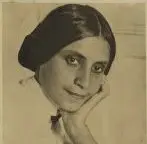
Photo: Shlomo Narinsky, National Library of Israel.
The Author
The Translator
Copyright © Zeva Shapiro 2025