
Mirrors of Matajudíos
Published in Issue #411
My friend Liz has been living in Spain since she left New York two decades ago, and by now she’s acculturated herself to her new home: she speaks Spanish with ceceo, none of her boyfriends know English, and she is the treasurer of the regional traditional dance society. We’ve kept in touch over the years, our friendship a thin thread stretched across continents, maintained through sporadic emails, text messages, and the occasional video call.
When she first mentioned the man who looked like me, I almost dismissed it. Exactly like me? I write back. Exactly?
Your twin jajaja, Liz writes. I’ll show you next time I see him.
I’ve heard this before—that someone looks like me—but what does that mean, really? To look like someone. The idiom is unforgiving, distancing. It’s a trick of language, linguistic sleight of hand. Looking like someone is not being someone. Similarity is harmless; identity is terrifying. From some almighty perspective, we’re all the same. We are like clouds, trees, shadows, ponds. We can find images of ourselves in all these natural things, because to us we are everywhere and like everything.
Liz was persistent.
The next weekend Liz sent me a message with a photo attached. Here he is, Liz messaged, Look I told you.
I opened the attachment. His hair was different, the slope of his pate not mine, the jawline and the position of his eyes relative to his nose: all subtly off. If you squinted, if you suspended disbelief and had me in mind but didn’t know me well, you might mistake him for me. But not me. I knew my reflection too well—I hated it—and when I looked at him, I didn’t feel hate. He wasn’t me.
Close, I wrote back. But not quite.
But over the next few months, the man became an obsession, unravelling the story I told about myself. I was a freelance translator specializing in Sephardic historical documents, a job that allowed me to keep history at arm’s length—cataloging pain without feeling it directly. My small apartment in Manhattan was a careful curation: shelves lined with books about the Jewish diaspora, carefully organized translation projects from Ladino and Spanish and Hebrew, walls without family photos. Each document I translated was another layer of distance to contain or put off the past.
Liz keeps sending me photos. Your twin is back, she’d write. Or, Here he is again. Crazy, right?
I didn’t think much of it. Liz had left a large city for a small town with its condensed passions and recurring faces. These things overlap, and sometimes lightning strikes. But this man, my twin, kept appearing. Once is coincidence, but twice? Three times? The man was like her own personal Zelig. Just for festivals. In one photo, he’s singing at the edge of a circle, his mouth wide and joyous; in another, he is sitting on a low stone wall in the dark, looking away from the camera, the folds of his dark cloak shifting in the wind. Then Liz sent me a video.
I couldn’t help but stare as I played it on loop. My twin was dancing. His feet struck quick, sharp patterns across the grass, his arms swaying to ancestral rhythms. His face—our face—was open, bright, as though this happiness was all there was to life. I hated it.
I sent the video to my sister. Does the guy in this video look like me? I asked.
She wrote back immediately: I mean, yeah, a little? He’s like you but Spanish dancing you.
My mother was more serious when she called. “It’s queer,” she said after watching. “He does look like you. A lot like you. Especially when he smiles.”
But I couldn’t see it. Or maybe I refused to. His chin was different. His eyes had a shape mine didn’t. And yet, the longer I stared, the more the resemblance unsettled me. I knew he wasn’t me, and yet I felt seen in him, like the glimmer of another behind you before the still, reflective surface of water is broken.
Then came the final photo. Liz met him—posed with him, even. He stood beside her, dressed in Castilian black, his wide-brimmed hat shadowing his face. He stared straight at the camera—not smiling, not frowning. He was knowing.
He made me pay him five euros for this, Liz wrote. He said it was worth it. I agree.
I did not agree. Something about his gaze felt like a summons.
His name, Liz would tell me, was Noé. I became haunted by Noé—not because he looked like me, but because it felt like he knew something I didn’t. That he was waiting for me to figure it out.
Shelley wrote about the twin self, the shadow that follows us—an idea older than Romanticism, older even than the Greeks, than all of us. The Gnostics wrote of the syzygy, the divine twin we cannot touch—our reflection perfected and unreachable, waiting in a place beyond this world. “When you know yourselves, then you will be known,” says the Gospel of Thomas. But Valentinus took it further: the self is split, a fragment lost in the material world. To see the twin is to see the self as it might have been: whole, divine, unreachable. But self-knowing, as Borges reminds us, is a labyrinth. Mirrors multiply us. Shelley gave us shadows. The Gnostics gave us a twin we can’t reach, a reflection trapped just beyond the glass.
When Liz sent me that last photo of Noé, I felt the shock of it. Borges feared mirrors because they multiply us, but Valentinus might say they reveal what we’ve lost. What was I looking at? What had I lost? A twin? A shadow? A reflection of something I hadn’t dared to know about myself?
And if I had been born in Spain, what would I see?
Where does a language begin?
2
For me, it started with the wrong language. When I was ten, the school gave us a choice: Spanish or French. French was the elegant language, the language of Voltaire and Rimbaud, the Quebecois who were my neighbors in New Hampshire, and Monsieur N’Diaye, the French teacher from Senegal. He had a booming voice, a massive smile, and a way of making verbs into music. I remember his sharp laugh, the way Rs rolled like waves breaking, the mbalax music he would play for us on the classroom speakers. French felt like silk.
I chose Spanish.
Mrs. Stefan was the Spanish teacher—a polite and orderly woman whose smile fled her eyes faster than it spread across her face. Spanish words felt different. They were heavy and windswept and quick—like stone, not silk. I couldn’t trill my Rs like she did. The rhythms resisted me at first, but I stayed. Spanish fixed itself in me like a cornerstone. While French students learned their vowel sounds from the diktats of the Académie Française, we were inventing our rhyming Spanglish, half-joke, half-tongue. Spanish felt closer, realer. I could hear it on school buses, in neighbors’ kitchens, and later on dance floors at quinceañeras where I fumbled my steps. Spanish made me larger than myself.
Over time, Spanish became a mirror. I didn’t know what I was looking for, only that it was hidden somewhere in its folds. Spanish taught me the grammar of my own tongue before it taught me to read Don Quijote, or “Donkey Shot,” as we misheard Mario Vargas Llosa once. I memorized Neruda’s Un perro ha muerto—a poem about a dog, loss, and love—before I learned how to forget. Spanish was Borges’ mirrors and labyrinths, Bolaño’s poets doomed to wander the modern world, Gongora’s intractable syntax, Lezama Lima’s tenderness, Aira’s mischief. It was Sor Juana’s voice in the cloister, the act of writing itself defiance and salvation. It was exile and return, poems and silences, memory and forgetting.
I began to see that my search wasn’t just mine. History had its doubles, the fractured selves trying to survive in silence. Soon I read about the conversos, the Jews of Spain who converted under duress, and the Marranoswho kept their faith hidden, lighting candles underground. Their descendants carried their surnames, their traditions, their accents, their silences. Names that once held meaning were hollowed out, stripped of their weight, fragments of an identity buried in fear but never fully erased.
The conversos lived as doubles: Catholic by force, Jewish by blood, split between survival and the burial of their past. Valentinus would have called this the syzygy, the spiritual twin we cannot reach: one self lives outwardly in the world, the other lost to silence and shadow. To the Marranos, that lost twin wasn’t just unreachable but also dangerous to know. Lighting candles underground was an act both of faith and of forgetting—each generation inheriting less light, fewer words, the twin self dimming with time. A candle lit underground is still a candle, but the flame will flicker sometime and expire.
This doubling wasn’t a story of endurance alone. It was a story told in erasures, a doubling that conquers and consumes the original. I heard the silence that stretched across their homes in the evening—parents muttering blessings they were too afraid to teach, children who inherited the holy tongue without the words to speak it. This is how we survive, I thought. Not in triumph, but in fragments and shadows, an incomplete heritage.
And when I looked at Noé’s face—his knowing expression, his impossible resemblance—it felt like seeing that lost self, my divine twin, staring back at me. Maybe I was looking at a version of myself that had survived the split: the candle, the flame, and the twin who didn’t disappear.
Borges said mirrors are monstruous because they multiply us: “Los espejos y la cópula son abominables, porque multiplican el número de los hombres.” A mirror takes what is singular and makes it plural. Spanish was my mirror. It gave me back something of myself—fragmented and unfinished, refracted and indestructible.
Maybe I kept reading to find out. I thought that if I read deeply and truly enough, I could translate something inside me, something buried but persistent. I kept rereading the opening line of Don Quijote—“En un lugar de la Mancha, de cuyo nombre no quiero acordarme.” In a village of La Mancha, whose name I do not wish to recall. A story that begins with a name forgotten, as though erasing what came before to begin again. Names mean survival, burial, inheritance. They mean choosing what is remembered and what is left behind.
And then Liz sent me that last photo of Noé. He was staring into the lens, wearing that hat and dressed in black. It wasn’t just a photo; it was a message. His face, my face, said: Todavía no has terminado de mirar. You’re not done looking.
Noé wasn’t just my double. He was my mirror.
His face, my face, was telling me something I didn’t want to hear. And every time I looked at the last photo of Noé—the one of him staring right into Liz’s camera—I felt it like a thunderclap: You have to go.
Noé’s face was not just resemblance. It was recognition. The name was no longer a shadow.
“Noé,” I said to myself. “Noé, Noé, Noé.” I repeated the name as if saying it would summon him.
But then another name, one that should have been lost, appeared in his place.
Matajudíos. I’d first encountered the name in a history book, sequestered in a footnote, a place that should not exist, absurd and almost laughable to me at the time: one of history’s bad jokes. Matajudíos: “Jew-Killer.” But as I grew older, the name took on weight, its meaning pressing down until it became unbearable. It wasn’t just a curiosity anymore; Matajudíos was a fossil of survival and violence, a relic of the Inquisition, when entire towns stayed alive by burying their past.
But history is a revenant. In 2014, the town voted to reclaim its original name—Castrillo Mota de Judíos, “Little Hill Fort of the Jews”—a gesture towards reconciliation and a concession that history abhors. Even now, vandals return to the town’s sign, scrawling old slurs with renewed vigor, as if to say: You can’t rewrite us. The old names do not go away; the old names endure.
I had avoided it for years. The name alone demanded something from me that I wasn’t ready to give.
But Noé’s face had changed that. I had known about Matajudíos for years, but reading is not the same as seeing. Reading keeps history safely at a distance, lets it remain abstraction. Noé’s face made that impossible. He was my shadow brought to life, standing in the place I had avoided all my life.
To see Matajudíos was to go down into the labyrinth—Borges’ mirrors, Valentinus’ twin, the name forgotten but not erased. I didn’t know what I was looking for, shadow or light, only that I had to look.
3
I packed lightly, unsure of what I would need, unsure how to go, unsure even of what I was looking for. Noé’s face haunted me, but it wasn’t his alone. It was mine, distorted, refracted, a mirror from another life with another light. I couldn’t shake the feeling that I was following a message he had sent to me across centuries, long before he and I were born, something waiting in a place where history had not yet faded. You’re not done looking.
The plane touched down in Madrid after an unremarkable flight. I found a cab at Barajas, and the driver, a man in his sixties with a low voice and a thin moustache, asked where I was going.
“Matajudíos,” I said.
He turned to look at me, eyes narrowing. “Castrillo Mota de Judíos,” he corrected. “They changed the name, you know?”
“I know.”
He shrugged and pulled the car into slow traffic. “They can change signs, but not what we remember.”
We drove for hours without haste. The city faded as the landscape opened into rolling hills, ochre fields dotted with olive trees. I imagined the conversos walking this road—families in silence, histories bundled away, candles lit only out of sight. Like a pilgrimage to nowhere, no relic to kiss at the end of the road.
It was twilight and the sunlight waned reticently when the driver dropped me off outside the village. The narrow road curved up toward a gate. There was no one in sight—no people, no animals, no voices—only the hum of wind sweeping through the hills. I thought briefly of the street dogs of Santiago, but there were no dogs here. The place was immaculate.
I stood at the gates of Matajudíos. They were heavy and wooden, braced with black iron, like they had not been opened or closed for centuries. I had seen these gates before, maybe in a dream, maybe in a book, maybe in the kind of memory that doesn’t belong to you but feels inherited.
I hesitate, feeling the weight of history pressing against my chest. The silence of the town folds over me thick as wool, hard like the stones of the walls that are waiting, watching, to see if I will knock. My hand trembles slightly as I lift it, but before my knuckles touch the wood, the gate creaks.
The sound splits the stillness, reverberating off the hills. I step back. The gate opens slowly, deliberately, like my decision to come here, or the fact of my presence, had been enough.
And there he is.
Noé stands in the opening, dressed in traditional Castilian garb, the hem of his dark garments shifting in the wind. A leather satchel hangs over his shoulder. He looks ancient and his face is unmistakably my own—my own face refracted through time, sharpened by something I don’t recognize. There is knowledge in his expression that unsettles me. It feels like he has seen me long before I ever saw him.
“¿Quién eres?” Who are you? he asks, his tone formal, his grammar familiar, his voice the echo of my own.
“Yo soy el judío.” I am the Jew, I reply. The words fall from my throat like lead balloons. They feel both mine and not mine, passed down as the inheritance I never knew was mine.
Noé tilts his head slightly, eyes far off. The gesture is familiar and disturbing, like I’m watching myself from the outside. A flicker of recognition crosses his untranslatable face.
He looks at me. Noé steps aside and gestures inward.
“Te hemos estado esperando.” We have been waiting for you, he says. The calm in his voice unsettles me more than anything. I cannot tell whether it is an invitation, a summons, or something darker yet.
The gate opens, and I step into Matajudíos.
4
The air here is wrong. Still, too ominously still, like the lull before a storm. The cobblestones under my feet are uneven, pulling at my steps as I walk through winding streets that seem to shift when I’m not looking—corners that didn’t exist a moment before, paths I’m certain I’ve walked that now lead somewhere else. It feels like the town is rearranging itself, subtly and in silence, to keep me wandering. Clay roofs lean close to shuttered windows. I feel eyes on me, but no one looks. The wind does not move.
Sometimes I pass figures, their cloaks sweeping the ground, their heads bowed like mourners. I think these must be the townspeople, quiet and reverent, moving with purpose. But as I walk closer, their faces blur, like seeing them is enough to undo them. The edges of their forms shift and smudge like ink in water and they slip further from me the more I try to focus. I look away, my pulse quickening, and when I turn back, the cobblestones where they stood are empty: they are gone. It feels like they aren’t disappearing but retreating under the siege of history into some fold of the town that I cannot follow, that I am not meant to see.
I walk. The streets loop endlessly, turning me in circles until I arrive at the main square, shadowed by the castle rising above it. The square is lit by a faint silver glow from the sky although there is no moon. And there, waiting in the center, is Noé.
Noé is not alone. A crowd has gathered around him—men, women, children, their faces sharp, vivid, familiar. I see old friends I dream about forgiving, family members lost to distance or death, strangers whose eyes seem to know. Each face is a part of me, but their presence here pulls at something deeper, like I have wandered into a memory I’ve forgotten how to remember.
Noé steps forward. His expression has not changed even if his eyes seem darker, steadier. He is looking at me. “This is not your first time here,” he says, his voice now in English, the words sudden and sharp, landing like a challenge.
I try to speak. I want to speak to Noé, to everyone gathered here in the center of Matajudíos, to ask why I am here, what this place is, what they want from me. But nothing comes. Spanish fails me. English is gone. My mouth opens and closes again, mute like rocks beneath my feet.
The crowd watches me in silence. They gaze with the weight of expectation.
Noé extends a hand towards me, his palm up. The gesture feels like both peace and demand, the empty-handed stranger waiting for me to yield what I am here to give—an answer, a reckoning, an offering, something only I can name. I think of Liz telling me about the photos, how Noé said he would charge her five euros for each one, his likeness carrying a price. Now it’s inverted: Noé’s outstretched hand demands something I do not have or have not yet recognized. I have nothing to give.
I stand there, empty and searching, under the castle of Matajudíos. The sun slips below the hills, and night falls. The weight of history—my own, this town’s, the world’s—closes in like a hunter. Matajudíos is around me, eternal, regnant. I have arrived where they have waited for me.
Sometimes the act of witnessing is inheritance itself. The conversos survived by fragmenting themselves—Catholic outside, Jewish within, a living translation between worlds. Now I understand.
Noé is waiting in the center of the square, the castle’s shadow stretching like a story written across centuries. The crowd around him is both familiar and spectral—faces that dissolve and reform like memory itself. Each face carries an alphabet of survival, of language buried and resurrected.
“This is not your first time here,” he says, his voice threading fragments of English and Spanish.
I want to speak, but words come differently now. Not as language, but as inheritance. The silences of Marranoswho whispered prayers underground, the surnames stripped of meaning, the candles lit in secret—the vocabulary of a language only we know.
Noé extends his hand. Not a demand, but an invitation to complete what was begun generations ago. His palm is open, waiting. I see now that what he wants is not an answer, but acknowledgment. Recognition of the story that has always been writing itself through me.
The townspeople watch. Their gazes are not accusatory, but expectant. They are the living footnotes of a history that refuses to be forgotten, the margins where identity is preserved when the text itself might be erased.
I step forward. My movement is both arrival and return.
“Yo soy el judío,” I say again. But this time, the words are not heavy. They are a key, unlocking something that was always mine, always waiting.
Noé nods. Not with triumph, but with a weary kind of recognition. We are both translations of some large tongue, imperfect, incomplete, but persistent, enduring. Then he turns and gestures for me to follow him.
The castle looms. His cloak ripples like a shadow as he steps into the dark beyond the square that is breathing, breathing. I hesitate, my feet rooted, but the townspeople begin to follow, their faces turned toward me as they pass. Matajudíos is not just this place, but it finally holds us all: split, hidden, forever. I have come home to a home I never knew I had lost.
Night has arrived, unfolding like a language waiting to be spoken.
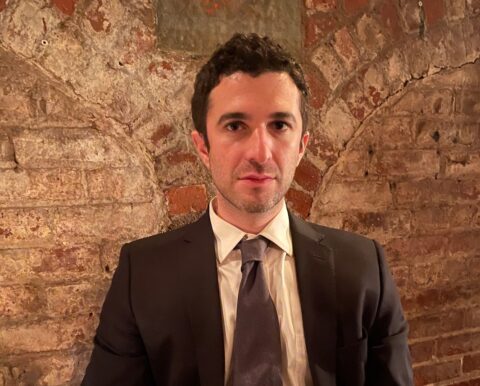
The Author
Copyright © Jordan Silversmith 2025