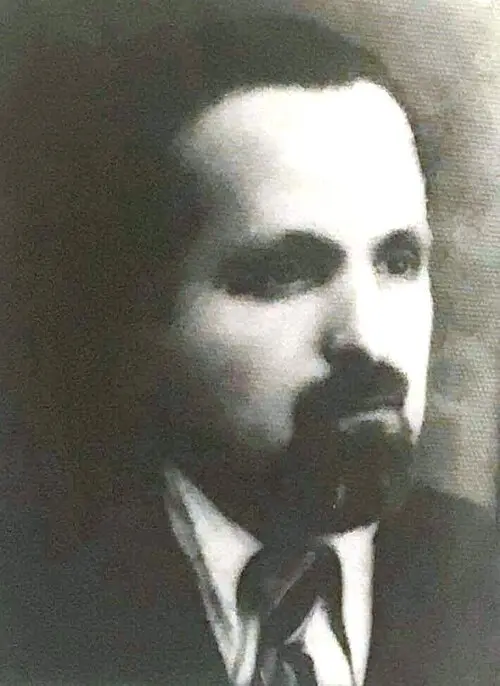

The House
Published in Issue #42 Translated from Spanish by Julian LevinsonBehold, the voice of Jaim, a Jewish farmer
With a heart of kindness, honor, piety, and peace.
My spirit encloses a clear vision of God
When it feels the joyful pulse of the earth.
It’s there in the sap of a fruit and the warmth of a nest;
And I know that God dies when the senses die.
Jehovah, God of all that lives! Beyond lies the grave
Where nothingness buzzes like a bee.
“In death there is no remembrance of thee, O Lord,”
Only on the earth we tread is your glory perceived.
I see you not as a reward, but a form of sustenance
For those whom labor and desire have bent low.
I.
Of Jaim Kahn’s four children, not one remained in the country to keep up the life he’d built there. They left, one by one, at the dawn of their teenage years, drawn to the city by the restlessness in their Jewish blood. His daughter married a clerk with aspirations. His eldest son went into business; the next pursued a career in medicine, and the youngest, after graduating from high school, became a journalist.
So it was that the old farmhouse went silent when its original owners were barely past middle age. Husband and wife watched the years pass by without needing to worry over an unwed daughter or imminent financial ruin -- for they owned a sizable plot of land and, in truth, their needs were very few. They cheerfully received reports from their children, now big-city dwellers, as well as praise from their neighbors, who regarded the aging farmer as an honorable patriarch. Besides working the land, he was well-versed in the Holy Scriptures, and it seemed to everyone that the mysterious workings of fate smiled on whatever he set his mind to. Reb Jaim, as he was called, spent his days in a warm glow of fulfillment, having seen the rough edges of life smoothed over. It seemed his just reward for having loved the land for as long as he could remember.
Since his youth, the sun that caressed his face had been a peasant sun, broad and strong. Ah, how clearly Reb Jaim recalled his early life in Russia, those remote years in a house near the mill where his father worked. The past was more vivid to him than the most recent events of his life. Whenever he thought about his youth, his emotions reached the deepest recesses of his soul. He saw again his former pleasures, glistening like trinkets at the bottom of an unclouded lake.
Among his tenderest memories were those of the tutor who first taught him to read. His father had brought the man from the city, and teacher and student would spend days on end together, absorbed in ancient volumes of the Torah and Talmud. Under his tutor’s guidance, the boy felt himself entering the innermost secrets of religion. Deep mysteries were illuminated as if by the light of day. Everything became clear and distinct, like an open field with a riverside mill. But as much as young Jaim loved to sit and study, when Saturday came, nothing could keep him at home nor in synagogue. During the winter months, when the earth lay under thick frost, he would run across the snow -- far, far away, in search of perfect solitude where his thoughts, so timid and restrained when he was among others, could run free. His imagination flowed on giddily as he ran, propelled as if by a mad flame. When it was warm, he would wander along the riverbank, and, after swimming, he would lie on his stomach, scanning the vast countryside. Then the spirit of God, which barely formed in his mind during his long hours of study, would surge up before him, floating over the earth just as in scripture it was said to float over the garden of paradise. The eternal and fecund earth was where the human and divine worlds met. Upward the boy’s thoughts surged, propelled by the powers of fantasy. Sometimes he would feel gripped by a sudden terror, as if a chaos greater than that which preceded creation was loosed inside his mind.
He couldn’t imagine any world but the one around him, nor God as anywhere but here on earth. He’d often noticed that not only he, but his father and his uncle as well, men well advanced in their years, would call on the name of God with utmost sincerity whenever anything went badly at work or if they became ill. This made him unable to think of God as a Being in some wholly distant sphere. He was always near at hand, only slightly higher than men, watching over their hesitant steps and providing warmth and succor as they went through their lives.
When years later, the boy’s father, filled with pride, encouraged him to press on with his learning and advance to the enchanted palace of the Kabbalah, the boy took only a few steps before refusing to continue.
“It’s an inhuman science; its teachings are impious and bleak,” he protested in Hebrew, which he always used when speaking with his father. “People influenced by Kabbalah become like animals terrified by the night; their hearts close up, their flesh trembles. The truth is I don’t want to study any more. I’ve had enough. You remember the story about Ben Azai, Ben Zoma, Acher, and Rabbi Akiba. Akiba tried to help the others by saying, ‘when you arrive at the place that shines like pure marble, don’t tell the world it’s only water.’ You know how Ben Azzai looked on it and immediately died; and Ben Zoma went mad; and Acher chopped down the plantings, which we understand to mean that he became an atheist. Only Rabbi Akiba managed to leave in one piece. And, father, I am afraid of the light.”
It was agony for his father to see his eldest son turn from spiritual pursuits to the material world, but when he understood the boy’s resolve was firm, he stopped trying to dissuade him.
“You want to work the land like a peasant, a muzhik, go ahead! You’ll be a muzhik – but without your own land. As a Jew, they won’t even give you half an acre!”
But Jaim was satisfied. He was sixteen years old, handsome and vigorous. Before long he was married and had leased a farm of his own. He lived and worked in peace – until the pogroms came. Mob violence struck with ever-greater frequency, threatening everything he’d built. And then Baron Hirsch appeared with his offer of a refuge for all persecuted Jews: a settlement in the Republic of Argentina. In a land where liberty was king, the Jews would finally have land of their own. Jaim Kahn trembled with joy. He would build a farm. His own property – to do with as he pleased! It would be like an extension of himself, joined like a hand and an arm. Without so much as telling his wife, he registered for emigration. When she heard the news, his wife was amazed at their good fortune, but she barely said a word, overwhelmed as she was by his manly will, which was like an intense light that absorbed all others. And Jaim Kahn knew how to succeed in the New World Deaf and blind to all else besides his goal, he conquered the forces of nature, as well as the corrupt administrators who threatened at any moment to dispossess him. Finally, on the day that his land was entirely paid off, it seemed as if forces much larger than himself had delivered him his deepest desires. The mystery of his good luck deepened, growing larger and more obscure.
And for his children to abandon the farm! He could never do it himself, but, then again, everyone had a right to do what was best for themselves. For him, it was enough to live close to nature, working the land with its eternal creative pulse that could make you forget that one day your own life would end. And he always thanked God for having shown him such kindness, and especially for granting him a wife like Ana, brave, strong, and generous. True, a woman is only a woman, after all—a female, one might say, with the same mission in life as any other. But when she turns out to be like his, a true companion, who can share the vicissitudes of life, and also milk ten cows, cook a meal for twenty and work the land when need be – this is truly a blessing of God.
This is how they lived and how their marriage matured over the years. They remained in the little house with the mud walls, built over thirty years earlier when they first took possession of the farm. The house was dilapidated now, with crevices in the walls and canvas patches in places where the ceiling had cracked. But its owners had no desire to move. They felt perfectly happy here, accustomed to their simple life and to these four walls that had witnessed the births of their four children. And besides, they wanted to avoid the expense of a new construction. They were careful with their money.
“We’re trying to leave something substantial for our children,” they responded to anyone who inquired about their frugal lifestyle. “Otherwise how will they remember us when we’re in our graves?”
Every spring, just in time for the Jewish new year, they scrubbed the walls, painted the doors, and fixed the leaks, as if dressing up an old lady for her granddaughter’s wedding or for a great party in honor of the world’s creation. The house was surrounded by thick shrubs, which made it look like a cave dug out of the ground, sheltering some simple, joyful animal.
Once it happened that the eldest son, Abraham the businessman, who was already a man of distinction with a small fortune, president of one of the most important Jewish organizations in the capital, and, to top it all off, father of two young professionals as well – it happened that this Abraham discovered his fortune had multiplied thanks to getting his hands on a winning lottery ticket.
“Praise the Lord,” he said excitedly. “He Who Dwells on High has rewarded me for my virtues. I don’t drink, don’t smoke… Never committed adultery.”
As a token of his gratitude, he decided to do something grand to honor his parents. What would be appropriate? He could have them move in with him and purchase the best seats in synagogue. But he knew his old father would never abandon the countryside for the city, which he detested. He could buy them a round-trip ticket to Palestine. But, again, would his father, who was rooted in his own land like a tree, risk dying in a distant land? Again he was at a loss, until he hit on the perfect idea.
“Listen, Sara,” he exclaimed as he approached his wife, a blonde-haired, stout woman, who at that moment was standing before a mirror, adjusting her necklace before going out to the theater. “Do you know what we can do for my parents? It’s just occurred to me. We can build them a nice second house on their land, near the poplar grove. That’s a gorgeous spot. That way they can enjoy their remaining years in comfort. What do you think?”
“A wonderful idea,” his wife replied with an outward show of excitement. Secretly she had feared the consequences should his parents join them in the city; a mother-in-law will, after all, always be a mother-in-law and the old farmer was so spartan that he would surely admonish her for her lavish lifestyle. “It’s just perfect. We won’t have to take them out of their element, but still we can show our love.”
“Wonderful! I’ll get to it right away,” said Abraham, who guessed her hidden thoughts and was happy to avoid any future quarrels that might disturb his home. “I’ll buy all the materials myself, as soon as possible, and then I’ll go to see them and get ready to build.”
So it was that one fine spring morning, a day after they’d finished scrubbing and cleaning the house, the old couple received a telegram from Buenos Aires announcing that their eldest son was scheduled to arrive at four o’clock that very afternoon. Once they read the final words, “All fine here,” the anxiety that had seized them when the telegram arrived transformed into joy.
The waning afternoon found parents and son returning from the train station in the neighboring town, smiles on their faces, catching up on recent news. They sat down together opposite the luxury carriages parked along the road, basking in the joy of reunion. They were speaking in Yiddish, the language of home, which filled Abraham’s heart with tenderness.
“Such beautiful sun, mother.”
“Yes, my dearest. You should come and enjoy it more than once a year. The city is too dark and cold for such pleasures.”
“Oh, I don’t know. There are even better places than this to enjoy the sun,” the son declared, taking slight offense on behalf of the city, which had served him so well.
He removed his hat to take in the warmth and his broad, bald head shone like polished steel.
“The sun is really beautiful here. And such magnificent air. It’s a shame I can only spare three days. My business needs me.”
“So what is business?” his father asked with a skeptical tone. “You couldn’t make a little sacrifice and spend a week with us? The crops don’t need much tending; we could spend the whole time together.”
“I can’t swing it. I’ve only come to tell you my big news. I won fifty thousand pesos in the lottery.”
“Praised be the Creator! Oh, thank you, thank you for filling my remaining years with such joy,” cried his mother, wiping her eyes with the corner of her white headscarf.
Reb Jaim felt as if the spirit of joy had swept him up, and he abandoned himself to its warm embrace. Then, recalling the blessings he too had received, he said grandly:
“May you enjoy your wealth in good health. May God never cease to provide for you.”
“I have nothing to complain about, thank God,” his son conceded, rubbing his hands. “It’s true. And so that you too can share in our happiness, Sara and I have decided to build a new home for you. Seeing that you’d never want to leave the country, we’ll build it for you next to the old house. It’ll be a mansion like nothing around here for a hundred miles, a place where you can enjoy your retirement in style. You’ve put in more than enough time living in this cave,” he exclaimed, gesturing towards his parents’ home, which they were gradually approaching.
“Cave?” The old man grew indignant. “We like it just fine here. This is all a little much, my dear son. We thank you for considering us, but we don’t need another house. You’ve brought us joy enough with your good news.”
“I insist. You need a house and I’m going to build it for you.”
His mother was weeping softly the whole time. Now she spoke up between tears.
“Your father is right. We have everything we need. Better you should keep your money for your own family.”
“Oh, I’ve already taken care of them. First off, they all have their own careers. Come December, my son David will have his Ph.D.”
At the mention of their grandson and his dignified university title, the discussion of the new house got sidetracked, and the grandparents were happy once again, lulled by warm feelings.
As they sipped their tea in their humble dining room, the father gazed through the window, contemplating the countryside. Then his soul was gripped by sadness, and he began once again to protest.
“Abraham, I beg you. Leave us in peace. We have no desire to leave our home.”
“I won’t hear of it. The house will be built. I won’t allow you to remain here. Look at these cracked mud walls… That roof. And besides, it doesn’t look good for somebody in my position for his parents to live in a shack. So what more is there to say? I’ve already ordered the materials. Tomorrow I’m going into town to meet with the builder. The house will be built and I’ll have done my duty by you.”
II.
All day long, the sounds of hammers, pulleys, and motors, alongside the shouts of foremen and the jabber of laborers echoed across the patio. While corn seeds were germinating deep in the early spring fields, obeying the earth’s eternal will to live, the hands of workmen built a structure whose solid grey exterior resembled cold stone.
Every morning, a warm vapor rose from the tilled fields, mixing with the thick clouds of dust hovering above the construction site. When the old couple sat nearby to observe the construction, they had to cover their ears against the noise. On the morning of Yom Kippur, the Day of Atonement, Reb Jaim prayed with greater fervor than ever before the words, “Do not cast me off in old age; do not abandon me as my strength fails.”
Soon the new house, the “chalet,” was completed. It was undeniably a magnificent structure. The colony had never seen anything like it. Standing alongside the poor old ranch house, the chalet rose up like a long shadow. It had two floors. On the ground floor, a kitchen, a dining room, and an alcove for sewing. Upstairs: a master bedroom and two guest rooms – or rather, rooms for children or grandchildren, should they desire someday to arrive.
To give the impression of opulence, the son conceived the idea of adorning the bedroom ceilings with images of chubby cherubs. On the walls he had angels painted in the form of women with long golden hair and their wings spread out as if in flight. For her in-laws’ bedroom, Sara ordered a thick carpet to muffle the sound of footsteps, and to avoid dishonoring the new house with any reminders of the old one, the son purchased elegant furniture at an auction, passing along the bill to his father. His gift had been the house itself, not its contents – this is how he justified himself to his brothers.
The house was finished on a luminous day at the height of summer. It was a season of abundant harvest; the trees in the orchard were heavy with fruit. All of the children came with their spouses and children, with the exception of the journalist, who sent a thoughtful gift instead, accompanied by a recently published article, which, he explained in a letter, had made quite a stir in the Capital.
Almost all of their neighbors came to the party. Roasted chicken and empanadas were served, along with cold beer. Having labored all day over these delicacies, the old woman sat at one of the tables on the patio, dizzy from the noise and worn out with fatigue. She left her farmhand Don Ramón and his wife to entertain the guests. Reb Jaim avoided the clamor of the house by playing with his grandchildren.
As the revelry wound down, several people delivered speeches that were accompanied by loud cheering and jubilant toasts to the old couple. A few former residents of the colony, who had auctioned off their land and now ran small businesses in neighboring towns, sat at one of the tables off to the side. Their ironic chuckles and hostile glares irritated Abraham, the wealthy businessman from the city.
“I don’t want to see any unhappy faces today,” he whispered to his brother, the doctor, who was sitting beside him.
“Bah! Even if you did want to see people’s pain, you probably wouldn’t be able to – your eyes are buried too deeply in your skull,” responded the doctor, who had always been envious of his brother on account of his success. But since his meaning was lost on his brother, who merely smiled in response, he decided to let it go.
Soon Abraham dozed off, worn out from the food and strong drink. When it was time for coffee, he arose suddenly and requested a moment of silence.
“Do you know what’s just occurred to me? I want us to raze the old house!”
Whispers and stunned glances passed through the crowd.
“Yes, let’s raze it,” repeated Abraham, his eyes flashing and his nose red. “We’ll demolish the old ranch and it will be as if we’re sweeping away poverty and backwardness.” And as he noticed skeptical looks on the faces of those who had moved out of the colony, he shouted out orders for immediate action:
“Let’s go, Don Ramón, call the boys in. Tell them to bring shovels and spades, whatever it takes to tear down this pathetic hovel.”
“Right now?”
“Yes! So all can see…”
“But Abraham, why destroy it?” begged his mother, her voice full of emotion. “Maybe the poor can use it.”
“Don’t worry about them! The poor can always sleep in the shed or in the guesthouseshen we’re not using them.”
“He’s crazy, completely crazy,” whispered the other brother, the doctor, who was standing by his sister.
“It’s going to stir up a lot of ground,” the father dared to say, as he felt his soul growing distant and vacant.
“It won’t stir up ground because we won’t have to uproot it. We’ll just bang on it in a few places so it starts to wobble. For years now it’s been barely standing – let’s be done with it once and for all! It will be a symbol of our success. I want today to be the beginning of a new era of prosperity in this area!”
And as the crowd looked on -- some genuinely thrilled, others merely amused -- hammers began striking at the whitewashed walls of the little ranch house. Thin white flakes cracked off and fell to the ground with a muffled sound, exposing the black interior of the wall cavities. Abraham’s mother could not hold back the tears welling up in her eyes. As for Reb Jaim, he felt for the first time in his life an overwhelming sense of the finitude of life. He shielded his eyes and, perceived within himself, amid a tremendous radiance, a vision of the end of physical existence.
III.
But the new house did not bring the good times for the Colony foreseen by Abraham Kahn. A new wave of evictions forced a number of lessors off the land and a young peasant killed one of the shop managers. Soon Reb Jaim himself began to feel unwell. A pallor swept across his handsome face and, as it grew deeper, his slender and vigorous body hunched over. His eyes lost their look of confidence and tranquility. Old age had overtaken him all of a sudden, as if a mysterious wind had come and swept away all of his noble longings. He complained of aches and pains, and in early autumn, coming home from the field at teatime, he fainted in the kitchen doorway. When they heard Ana’s cries, Don Ramón and his wife Doña Juana came running; the oxherd raced off to the next town to fetch the doctor and send telegrams to Reb Jaim’s sons.
He appeared to be paralyzed, and it was decided that he needed to be brought immediately to Buenos Aires.
“No, not Buenos Aires, no,” the old man cried in a weak and tearful voice, turning pleadingly toward his younger son. He was terrified. He was certain that he would soon die, and the idea that he would end his days in such a distant place filled him with horror. Here I have lived; here I will die.
There were protests, arguments, debates.
“Do as he says,” the mother intervened. “Our end is near. It’s a sin to oppose the will of the dying...”
Once the climax of his agony passed and treatments with various doctors had been arranged, the house sank into a deep and mournful silence.
Reb Jaim lay prostrate in bed, his emaciated face looking even paler than usual in his grey sleeping gown. Like the white shadow of his mortal body, his companion of many decades never departed from his side. She read him the newspapers, spoke of pleasant things, and reported on the doings at the ranch.
“Don’t you worry,” she said whenever she saw his face darken with worried thoughts. “Don’t worry at all. Don Ramón is perfectly able to take care of things…”
But it wasn’t the little things at the ranch that tormented the old man. No. It was something far deeper that made the cries in his heart so loud that they could not be ignored: “Jaim! Jaim! Look what’s become of you!” he thought grimly. “Why has God punished you with immobility, you who carry the name of ‘Jaim,’ of life?”
Oh, his rigid body – like the new house itself! This long, narrow bed like a coffin. This silent room like a vacant temple. This room suspended in a void with absurd plaster angel-heads near the ceiling that he couldn’t avoid staring at. My Lord! My Lord! How he hated this room… His mind would return to the small room in his old house and his heart would fill with bitterness. Oh! Often in the frequent sleepless nights of his old age, the old ranchito appeared before him, vibrating as if filled with nerves and blood. It had become his companion. Sometimes it had seemed as if tiny animals had built their nests in the walls and his room itself had became a barn where he could listen during the long nights to the quiet suckling of baby sheep. Surrounded by soil as if submerged in a cave, truly like a cave (as his son would have put it), the old ranch seemed to be permeated with the throbbing sweetness of the earth, and the humans who lived there no longer felt alone.
All of these sounds came to him now, invigorating him as if their animal vitality were warming his body. Reb Jaim had felt secure and tranquil in his old ranch rooted in the mud and soil. By contrast, in his new house, which stood upright like a stone slab, the world seemed cold and alien. And now he too felt himself suspended under the gaze of the plaster angels with their dull faces, and he felt afraid.
The terror of death gripped him even more strongly than it had the time a bolt of lightning singed a goat grazing beside him in an open field. He felt the terror growing inside him, expanding from day to day like a fetus in a mother’s belly, becoming interlaced with his most intimate tissues. What could he do? Call out to God? But his prayers were losing strength, losing form. There were even times when his words sounded like outright lies when he heard himself speak them aloud. His prayer shawl, which his wife draped over his shoulders on the first Sabbath mornings of his illness, now dangled from a hanger in the closet.
“Cheer up!” his wife commanded when she saw the lethargy deepen in his eyes. “The doctor says you’ll be better in a month, and if God wills it, you’ll soon be able to leave your bed.”
Reb Jaim closed his eyes and listened with calm satisfaction to the anguish in her voice. Oh, these walls! These tiny angels! This carpet! What a martyrdom! If his old ranch had not been demolished he would have told them to place him in his true home. But everything had already been destroyed.
One morning, during one of his regular visits, the doctor said to him:
“Don’t you see, Don Jaime? Don’t you see that your arm is beginning to move?”
“Yes, it’s true. He’s moving an arm,” his wife shouted with glee. “I’ll run and tell Ramón.”
The doctor took her aside and told her to leave at once and enjoy herself, now that Don Jaime was doing better.
“You must make sure that you don’t fall ill,” he added. “Ramón will watch Don Jaime in your absence.”
“Ramón has other work to do —”
But the old man interrupted her brusquely. “I can be on my own for a few hours. Look, I am much better. I’ll take a nice long nap and you go and enjoy yourself in town.” His voice sounded irritable. The constant presence of his wife had begun to wear him down. She’s always by my side, he told himself. But she can never see the depths of my pain!
It was well past three in the afternoon. The old woman departed in the carriage with her valet, having sent word to her children in Buenos Aires that their father was improving. Ramón visited his employer’s room several times and, finding him asleep, set about repairing a pen door. Sunlight poured over the newly plowed fields. The hens, surprised at the sudden quiet that reigned over the house, wandered into the courtyard and were pecking here and there contentedly. Their soft clucking seemed like the voice of the peaceful, vacant, soft hour.
As darkness settled over the bedroom, the sick man was able to rest. But although his eyes were closed and he eagerly courted sleep, he could not drift off. The silence outside and the calm inside made the words within him all the more painful and tormented him so much that he feared for his sanity. How dreadful it seemed!
In the shadowy room the cherubs’ eyes seemed filled with a dark secret, and the angels on the walls looked as though they were embarked on an obscure mission. A great fear overtook Reb Jaim, and his soul was gripped by paralysis just like his body. Then, in a tremendous act of self-assertion, he raised his right hand and pulled the curtain cord. He yearned to look outside, to catch a glimpse of Nature, of life; but all he saw was the sky. From his room and his bed he could make out nothing but the firmament, empty and colorless. Drops of cold sweat started trickling down the sick man’s face, and he cried out for help. Nobody answered. Perhaps his screams were swallowed up by the abyss of the cherubs’ eyes or by the abyss of the firmament never to return to earth. His body shook with agony and his tongue became intolerably dry. Ana! Ana! Again his cries were swallowed up by the mystery. Then, summoning a final superhuman burst of strength, he sat up in his bed, pushed himself onto the floor, and managed to stand up. He made his way down the stairs and across the patio, where he passed a tree with a shovel leaning against it, and shuffled through the gentle sunlight toward the open field. The tiny dog, Blackie, recognized him and cheerfully followed him. Reb Jaim began to dig. He soon tired of the shovel and, descending to his knees, began scratching at the ground like a poor, persecuted animal, a poor little animal who only feels secure in the bosom of the earth. The dog, observing his master, began clawing at the ground with his paws, as well. The two worked quickly, panting and sweating.
When the pit was large enough, spacious as a cave, Reb Jaim allowed himself to collapse into it. His face was deathly pale. He gazed intently at the serene field around him, shook with a convulsion, and went stiff.
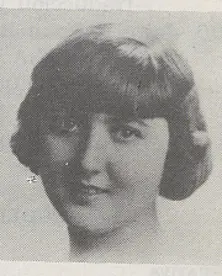
The Author
The Translator
Translation copyright © Julian Levinson 2026